Introduction
Modern diesel trucks are engineered to meet strict emissions regulations while delivering the power and reliability needed for long-haul transportation. At the heart of every modern heavy-duty diesel engine is the aftertreatment system, a collection of components including the Diesel Particulate Filter (DPF), Diesel Oxidation Catalyst (DOC), Selective Catalytic Reduction (SCR), and Exhaust Gas Recirculation (EGR) system. These components work together to reduce harmful emissions, improve engine efficiency, and maintain compliance with environmental standards.
When even one of these components begins to fail, the entire emissions system can suffer. Drivers may notice frequent regeneration cycles, poor fuel economy, warning lights, reduced engine power, or complete engine derate. Many truck owners replace expensive parts without identifying the real cause, leading to recurring problems and unnecessary repair costs. A professional inspection focuses on the complete system instead of isolated components.
Evergreen Truck Service provides mobile diagnostics and aftertreatment inspections throughout Atlanta, Georgia, and Ontario, Canada. By bringing advanced diagnostic equipment directly to the truck, technicians reduce downtime while identifying problems before they become major failures.
Professional inspections also create a maintenance baseline for future service. By recording sensor readings, regeneration intervals, exhaust temperatures, pressure values, and visual observations, technicians can compare future inspections against previous results. This trend analysis helps detect gradual deterioration before it causes breakdowns, allowing truck owners to schedule repairs during planned maintenance instead of losing valuable driving time unexpectedly.
Why the Entire System Must Be Inspected
The DOC, DPF, SCR, EGR system, turbocharger, sensors, DEF system, and engine control module constantly communicate with one another. A blocked EGR valve can increase soot production. Excess soot overloads the DPF. A restricted DPF increases exhaust backpressure and affects turbo performance. A faulty NOx sensor may trigger SCR fault codes even when the catalyst is healthy. Because every component influences another, inspecting only the part that generated the fault code rarely solves the underlying issue.
Professional technicians evaluate mechanical components, electronic sensors, wiring, live data, and historical operating conditions. This complete approach reduces repeat failures and helps fleets make informed maintenance decisions.
Step 1: OEM-Level Computer Diagnostics
Every inspection begins with a comprehensive electronic scan using professional diagnostic software. Active faults, inactive faults, pending faults, freeze-frame data, regeneration history, soot load, ash accumulation, exhaust temperatures, differential pressure, DEF dosing values, NOx sensor readings, and engine operating data are reviewed.
Unlike basic code readers, OEM-level diagnostics allow technicians to compare sensor values with manufacturer specifications. Live data often reveals developing problems before fault codes appear, enabling preventive maintenance that minimizes roadside breakdowns.
Step 2: DPF Inspection
The Diesel Particulate Filter captures microscopic soot particles generated during combustion. Over time, soot is burned away through regeneration while non-combustible ash gradually accumulates inside the filter.
During inspection technicians check differential pressure, inspect the filter housing for leaks or cracks, evaluate soot and ash loading, verify regeneration frequency, and determine whether cleaning or replacement is required. Excessive backpressure can reduce engine performance, increase fuel consumption, and shorten turbocharger life. Professional cleaning restores airflow without damaging the filter substrate, unlike improper cleaning methods that may permanently reduce filtration efficiency.
Step 3: DOC Inspection
The Diesel Oxidation Catalyst creates the heat required for efficient regeneration while reducing hydrocarbons and carbon monoxide. Contamination from oil, coolant, or poor-quality fuel can reduce catalyst efficiency.
Technicians inspect for thermal damage, melting, contamination, physical blockage, and temperature performance before and after the catalyst. Reduced DOC efficiency often causes incomplete regenerations, increasing soot accumulation inside the DPF and leading to recurring fault codes.
Step 4: SCR Inspection
The SCR system converts nitrogen oxides into harmless nitrogen and water using Diesel Exhaust Fluid. Inspection includes DEF quality, injector spray pattern, dosing accuracy, DEF pump operation, catalyst efficiency, NOx sensor accuracy, and crystallization within the system.
Even minor dosing issues can trigger engine derate and emission faults. Early detection prevents expensive catalyst damage and keeps trucks compliant with emissions regulations.
Step 5: EGR Inspection
The EGR system lowers combustion temperatures by recirculating controlled amounts of exhaust gas back into the engine. Carbon deposits may cause valves to stick while restricted coolers reduce flow efficiency.
A professional inspection checks valve movement, cooler condition, carbon accumulation, coolant leaks, actuator operation, and electronic controls. Cleaning or repairing the EGR system at the right time improves combustion quality and reduces soot production, helping the DPF last longer.
Turbocharger, Sensors and Exhaust Components
Turbocharger efficiency directly affects combustion, emissions, and fuel economy. Inspectors evaluate boost pressure, compressor and turbine condition, intake piping, charge-air leaks, exhaust leaks, and shaft play. They also verify exhaust gas temperature sensors, pressure sensors, differential pressure sensors, NOx sensors, DEF level sensors, and wiring harnesses.
Faulty sensors frequently create misleading fault codes. Accurate testing prevents unnecessary component replacement and ensures reliable engine performance.
Regeneration Analysis
Technicians study passive, active, forced, and parked regeneration history. Trucks requiring frequent regeneration often have hidden airflow restrictions, injector problems, turbo inefficiencies, or EGR faults. Understanding regeneration patterns helps identify the true cause rather than treating the symptom.
A healthy truck completes regeneration at appropriate intervals with normal exhaust temperatures and acceptable pressure readings.
Benefits of Preventive Inspection
Routine inspections help fleets reduce downtime, improve fuel efficiency, extend DPF life, lower maintenance costs, improve driver confidence, reduce unexpected roadside failures, and maintain compliance with emissions regulations. Preventive inspections also support better fleet planning because repairs can be scheduled before critical failures occur.
Why Choose Evergreen Truck Service
Evergreen Truck Service specializes in mobile aftertreatment diagnostics and inspections across Atlanta, Georgia, and Ontario, Canada. Instead of waiting for workshop availability or paying expensive towing charges, technicians travel directly to the truck with professional diagnostic equipment.
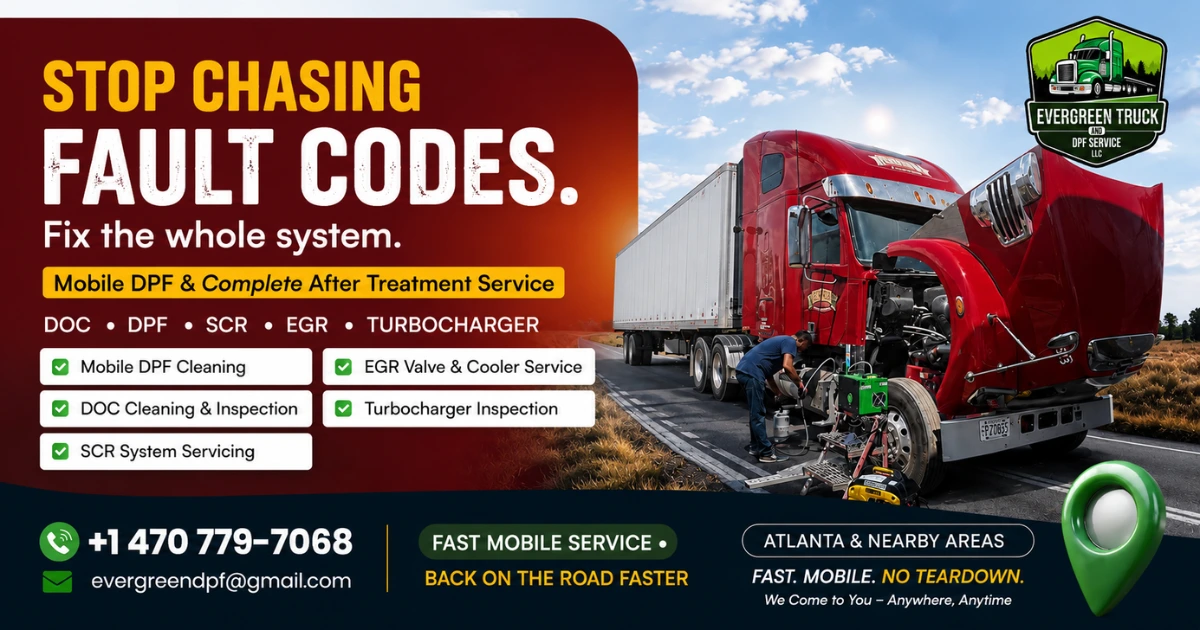
Services include mobile DPF diagnostics, DOC inspection, SCR inspection, EGR evaluation, sensor testing, forced regeneration, aftertreatment troubleshooting, and expert recommendations based on real diagnostic data. This mobile approach minimizes downtime and gets trucks back on the road faster.
Conclusion
A professional DPF, DOC, SCR, and EGR inspection is one of the smartest investments a truck owner or fleet manager can make. Rather than replacing expensive components based solely on fault codes, a complete inspection identifies the root cause of performance issues and protects the entire aftertreatment system. Regular inspections improve reliability, reduce operating costs, extend component life, and help prevent engine derates and costly roadside breakdowns.
If your truck is experiencing warning lights, frequent regenerations, reduced fuel economy, excessive smoke, or loss of power, don't wait until a small issue becomes a major repair. Contact Evergreen Truck Service for professional mobile aftertreatment diagnostics and inspections anywhere in Atlanta, Georgia, or Ontario, Canada.
Frequently Asked Questions
How often should a DPF inspection be performed?
Most heavy-duty trucks benefit from inspections during scheduled preventive maintenance or immediately after repeated regeneration events, derate warnings, or check-engine lights.
Can mobile technicians inspect the entire aftertreatment system?
Yes. Professional mobile diagnostic equipment enables complete system evaluation, live data analysis, sensor testing, and fault diagnosis at your location.
Does cleaning always solve DPF problems?
No. Cleaning restores filter flow, but recurring issues often originate from injector, turbocharger, EGR, SCR, sensor, or engine problems that also require inspection.
Why is differential pressure important?
Differential pressure indicates exhaust restriction across the DPF and helps technicians determine whether the filter is functioning correctly or requires cleaning or further diagnosis.
What areas does Evergreen Truck Service serve?
Evergreen Truck Service provides mobile diagnostics and aftertreatment services throughout Atlanta, Georgia, and Ontario, Canada.