
Hydrogen Engine Cleaning
Advanced HHO hydrogen cleaning removes stubborn carbon deposits from your entire engine and aftertreatment system - without dismantling, in under 3 hours.
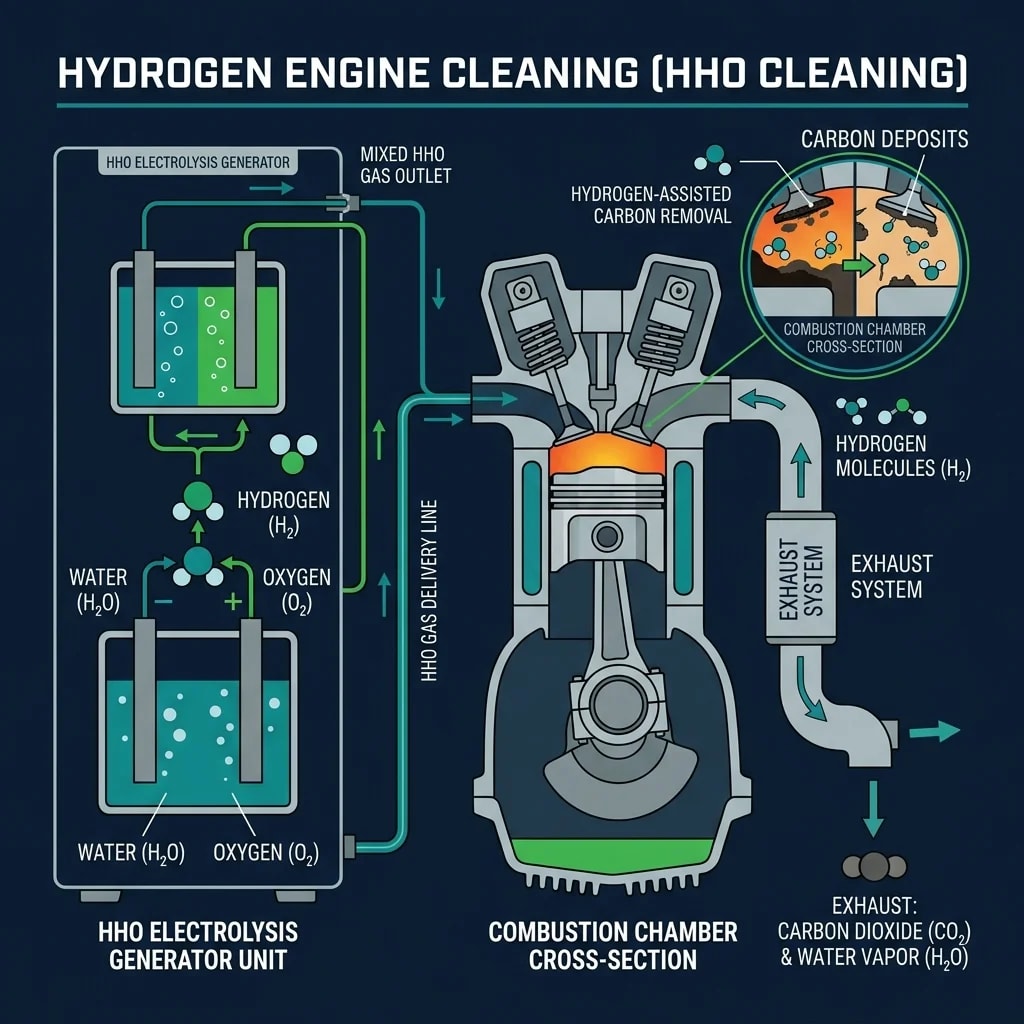
Innovative Hydrogen Engine Cleaning That Restores Performance Without Downtime
Our hydrogen engine cleaning service uses electrolysed hydrogen-oxygen (HHO) gas to safely and thoroughly remove carbon deposits from the combustion chamber, injector nozzles, intake valves, EGR system, and DPF - without any engine disassembly. The hydrogen molecules penetrate carbon buildup at a molecular level, converting it to CO₂ and water vapour which is then expelled through the exhaust. The result: restored power, improved fuel efficiency, reduced smoke, and a cleaner aftertreatment system - all achieved in under 3 hours.
- No engine disassembly required - engine stays fully installed
- Cleans combustion chambers, injector nozzles, intake valves, and EGR passages simultaneously
- Reduces DPF soot loading - extends cleaning intervals
- Service completes in under 3 hours with minimal downtime
- Improves fuel efficiency by up to 12%
- Reduces exhaust smoke and particulate emissions
Benefits of Our Hydrogen Engine Cleaning
Industry-leading service backed by expertise, technology, and reliability
Full Engine Clean
HHO gas reaches every internal combustion surface - injectors, valves, combustion chambers, and the EGR - in a single service.
Under 3 Hours
No dismantling means no extended workshop time. Most hydrogen cleaning sessions complete in 1.5–3 hours.
Fuel Savings
Cleaner injectors and combustion chambers improve atomisation and combustion efficiency - measurably improving fuel economy.
Reduced Emissions
Less carbon in the engine means reduced soot, smoke, and particulate output - benefiting both compliance and the DPF.
How It Works
Our streamlined process ensures quality results with minimal downtime
Pre-Clean Assessment
We log ECU data - fuel trim, injector corrections, EGR readings - to baseline engine condition before cleaning.
HHO Equipment Connection
Our hydrogen generator is connected to the engine's air intake. The truck runs at controlled RPM during the process.
Hydrogen Cleaning Cycle
HHO gas flows through the combustion system, breaking down carbon deposits at a molecular level over 60–90 minutes.
Post-Clean Data Comparison
ECU data is re-logged and compared to pre-clean values. Improvements in fuel trim and injector corrections confirm results.
Report & Recommendations
You receive a written report with before/after ECU data and recommendations for complementary services if needed.
Frequently Asked Questions
Common questions about our Hydrogen Engine Cleaning service
Hydrogen engine cleaning uses electrolysed hydrogen-oxygen (HHO) gas produced on-site from water. This gas is introduced into the engine's air intake while the engine is running. Inside the combustion chamber, the hydrogen and oxygen molecules react with carbon deposits, converting them to carbon dioxide and water vapour - which are then expelled harmlessly through the exhaust. Because the process works at the molecular level, it reaches internal surfaces that cannot be accessed by traditional cleaning methods without engine disassembly.
Hydrogen engine cleaning treats the full combustion path: fuel injector nozzles (improved spray pattern), combustion chamber surfaces (removed carbon glaze), intake valves and ports (carbon deposit removal), EGR system passages (reduced soot coating), turbocharger turbine surfaces, and the DPF (reduced incoming soot load from a cleaner engine). It is the closest thing to an internal engine deep-clean without disassembly.
Yes - hydrogen engine cleaning is completely safe for all modern diesel engines when performed correctly. HHO gas is introduced at a controlled, safe concentration (well below the flammability threshold inside the intake). The cleaning process operates at normal engine running temperatures - no extreme heat is applied. There are no aggressive chemicals, solvents, or abrasives involved. The process is used by fleets, dealerships, and truck operators worldwide.
A hydrogen engine cleaning session typically takes 1.5–3 hours from hook-up to completion, including pre- and post-clean ECU data capture. This includes the engine warm-up period, the 60–90 minute HHO cleaning cycle, and the final assessment. Most trucks are back in service the same day - often within half a working day.
A cleaner engine produces significantly less soot and particulate matter, which directly reduces the rate at which the DPF accumulates deposits. Many fleet operators see DPF regeneration intervals extend by 20–40% after hydrogen engine cleaning - and DPF cleaning intervals are also extended. For maximum benefit, hydrogen engine cleaning is often performed as a preventive maintenance service alongside or before a DPF clean.
Results vary by vehicle, engine age, and how carbon-loaded the system was before treatment. Our customers typically report fuel economy improvements of 5–12% following hydrogen engine cleaning. The improvement is most pronounced in engines that have accumulated significant carbon - typically trucks over 200,000 miles or those operating in stop-and-go conditions with frequent short trips that prevent full regeneration.
For preventive maintenance, hydrogen engine cleaning is recommended every 50,000–80,000 miles for highway trucks, or every 12–18 months for trucks in mixed or urban duty cycles. For trucks with active symptoms (increased fuel consumption, higher smoke, DPF loading faster than normal), it can be performed at any time. Many fleet operators build it into their scheduled maintenance intervals.
Ready to Book Your Hydrogen Engine Cleaning?
Expert service is just a call away. Choose your preferred way to connect with us and get your truck back to peak performance.